
This is an old email I found in my inbox after reading this tweet and remembering I once also thought the magazine Granta was a joke. I think I was a better writer back then. Also, I'm still just as acerbic. But I can't picture myself spending the time I spent writing this writing something like this.
---------- Forwarded message ----------
From: Francisco Homem de Mello <franciscomello@XXXX.com>
Date: Monday, June 2, 2014 at 17:00 GMT-3
Subject: On Ned Beauman’s Glow
To: <editorial@granta.com>
To the editors,
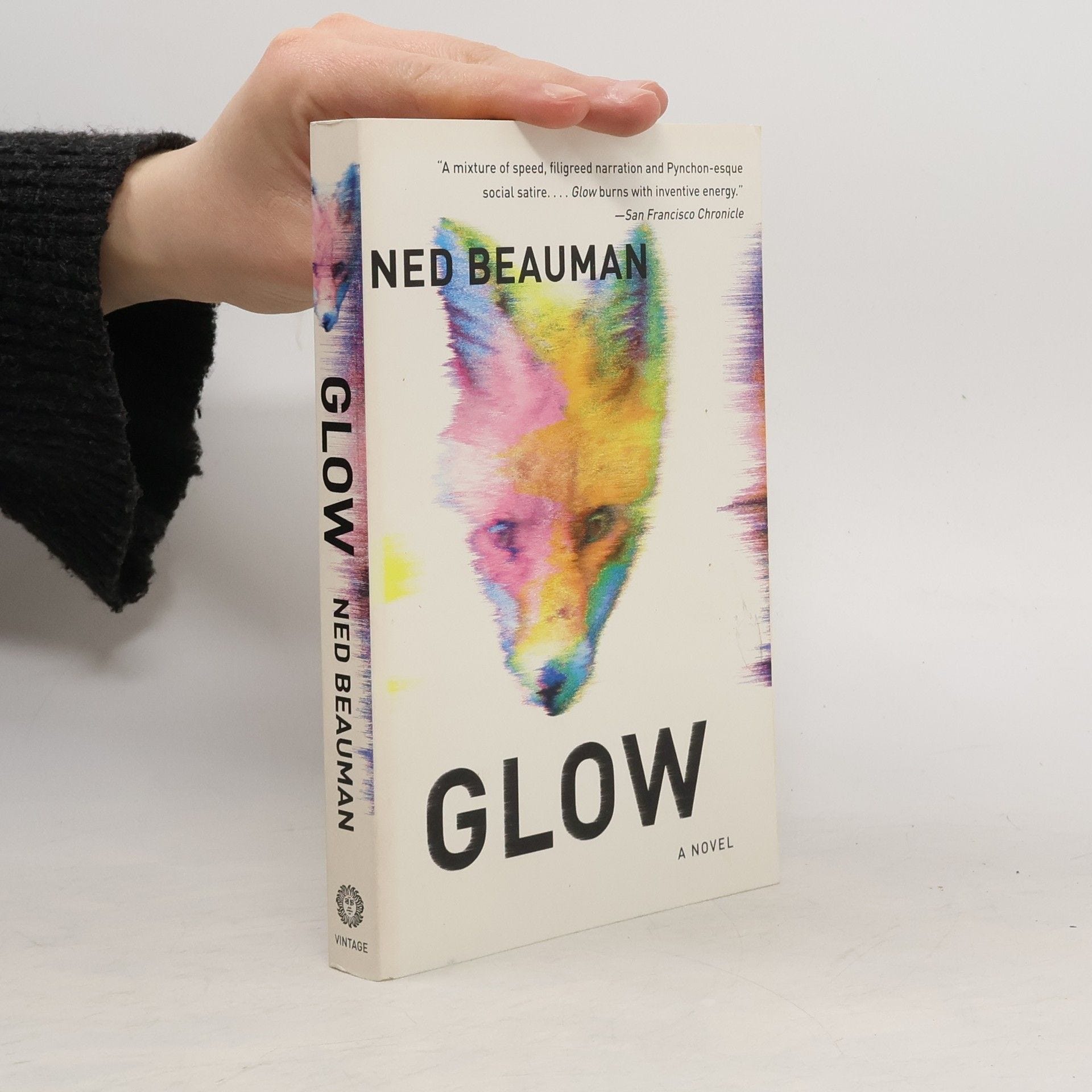
Ned Beauman’s Glow left me flummoxed. Actually, the first twelve pages left me flummoxed, so much that I couldn’t go on reading. Or was it startled, in a very bad way?
I purchased the book only because it read, on the upper right hand corner of the cover, “A Granta Best Young British Novelist 2013”. I thought to myself if Granta said so, it must be good. Why not help a new novelist? “Ned Beauman has reinvented the international conspiracy thriller” is not bad either. Should I believe the back of a book? I am a believer. And, everybody loves conspiracies.
So there was I sitting in a not-so-comfortable chair in Madrid Barajas Airport, waiting for my turn to board a flying tin can, when I looked into my Relay plastic bag and decided to tackle Glow before John Le Carré’s A Delicate Truth. An eight-hour flight to Brazil awaited me and I was eager for company.
On the first page of the book Ned was describing a launderette rave party in London when I stumbled upon a – very – unfortunate analogy tucked into a description of a girl our protagonist had sighted on the dance floor: “and she has one of those faces where the entire bone structure seems to ramify from the cheekbones in such a way that the result looks like a 3D computer graphic from the eighties because it’s composed of such an economical number of sharp, flat planes, except that the angles are confused here by strands of long black hair escaping from where she’s pinned the rest of it up at the back of her head;” I tried to think about what it meant to have lines ramifying from the cheekbones, but my imagination goes only so far, and thinking about the economical sharp flat planes which are so 80s didn’t help me either.
My first contact with serious writing came when I did a “Inside the writer’s mind” course at Gotham Writers. One of the things I remember from that freezing February Friday was that “first and last pages are the writers’ Achilles’ heel”, where one feels compelled to be extravagant in an effort to impress readers. Damn I can’t remember the name of my teacher/actor/performer/writer. So I forgave Ned for that awful handful of lines. And Knopf. And Inkwell. And Lutyens & Rubinstein. People must be underwater these literary bull market days with so much editing work that they must have missed this.
But until the third page I was soaked with four more drug and techno-related hideous analogies: “The sound system isn’t even that loud but the room’s so small that the treble pushes at the sides like a fat toddler stuffed into a car seat.” Isn’t it the bass that makes things move because of air displacement? “Raf had thought of ecstasy as a substance so synthetic it was almost a pure abstraction”; Jesus! Since when is syntheticity related in any way is abstraction? Is a mathematical theorem synthetic? “To find out that ecstasy – like cocaine, like opium, like marijuana – comes from a plant that grew in the ground is to find out that angels have belly buttons.” Oh, how did you find this out? Can you introduce me to some angel? I am dying to see an angelical belly button.
Finally, in distress, I read “he started to feel a change, but so weakly that he wasn’t even sure, like when you go into a room and you think you can feel a cold draught but no windows are open and it might be just your imagination.” Oh god, take any sharp objects away from me or I will kill myself. From what he wrote I would guess he felt a draught in a room with wide open windows: had he not taken potent new drugs after all
But wasn’t Ned Beauman a Top British Novelist? Hadn’t Granta, the literary Bible, said so? Maybe I was the stupid one, who just didn’t know the latest trend in creative fiction was to ignore all the time-tested style rules.
But the descriptive analogy horror show – and my willingness to plow through – wasn’t over yet. “When the bus finally arrives, its windows are bright like a goods vehicle hauling not flowers to market but bulk protons.” Shit, bulk protons? Has anyone, ever, saw a few protons, as opposed to a lot of them? Doesn’t a light beam carry gazillions of protons?
Not sure. But hey,“and about two dozen soiled earplugs scattered under the bed like the droppings of a hamster that eats only packaging foam.” You know, this was a very specific looking bunch of hamster shit. Sooooooo earplug-looking I couldn’t touch my Beats by Dr. Dre for-a-week.
It wasn’t before I read the first useful analogy of the book - when the author described how the main character suffered from a rare syndrome - that I took the courage to close it and give up. I had entered the Iberia plane, sit on my minuscule coach seat, and the thing was getting ready to take off. “Whatever the cause, the effect is that each morning he slips one more hour out of sync with the rest of the world, as if he’s taking a short westbound flight every day of his life without ever leaving London.” Finally something I could even understand. I was myself going to fly west that afternoon, “eating” five hours out of ten and making up five hours from thin air in the process. Is it really that difficult to describe things without making a mess? To use a couple of interesting analogies, but not overuse them? Neither John Le Carré nor I deserved that torture.
Cheers,
Kiko